

NUMBERS DON’T LIE
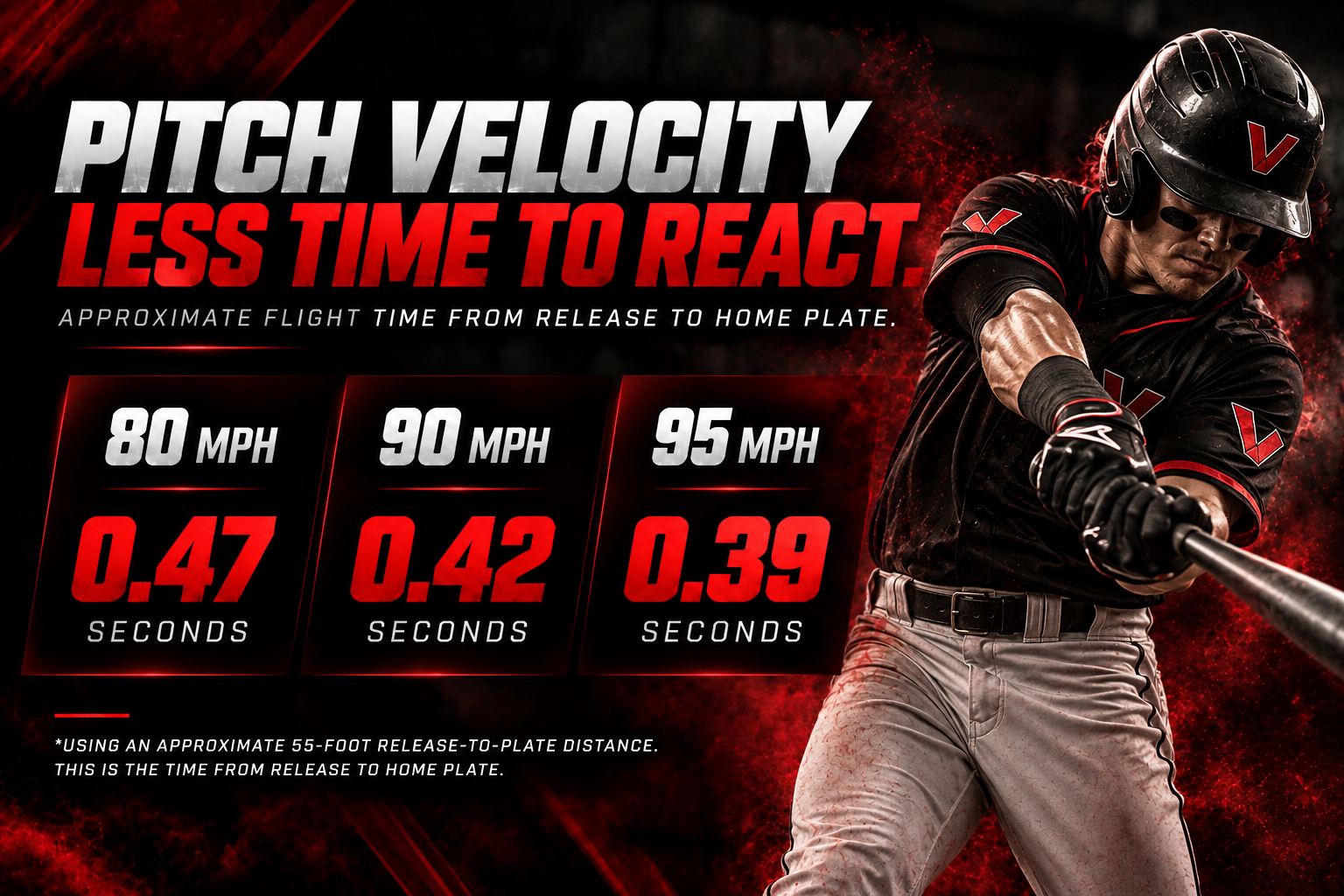
At 95 MPH, the entire pitch is over in about 0.39 seconds.
Within that time the hitter must:
Pick up the release → Track the ball → Recognize speed → Read location → Identify movement → Decide swing or take → Coordinate the body and barrel.
It takes 80–100 MS for the brain to process the visual information (roughly 10-15 feet out of the hand)
It takes 150+ MS to physically swing and execute the action.
WHAT'S LEFT?
A very small window to recognize the pitch and make the right decision.
Simple takeaway:
The hitter doesn't have 0.40 of a second to decide. The hitter has 0.40 of a second to do everything.

Outfield range starts before the player reaches full speed. At contact, the outfielder must quickly see the ball, read its direction and trajectory, recognize depth, make the correct first move, and accelerate on an efficient route. A delay of just 0.10 seconds can represent roughly 2.7 feet of lost range for an athlete moving at 27 ft/sec. That small delay can be the difference between getting underneath the baseball and chasing it to the gap.
PLAYER A — READ. REACT. ARRIVE.
Player A gets a good visual read immediately, makes the correct first move, and takes a direct route. He gets to the spot early, gets his body under control, and is ready to make the catch.
PLAYER B — DELAY. ADJUST. CHASE.
Player B recognizes the ball late. That delayed reaction creates a late first step and forces him to adjust his route while running. Now, instead of arriving at the spot, he is chasing the baseball and trying to make up lost ground.
A fast athlete can still play slow when the read is late. Outfield range is a combination of vision, reaction, route efficiency, and speed—not speed alone.

For an infielder, the first move happens almost instantly. On a 100 MPH batted ball, just a 0.05-second delay means the ball has already traveled another 7.3 feet before the fielder reacts.
Even on slower ground balls, waiting too long gives the ball more time to travel and forces the defender to make the play from a tougher position.
Great infield defense requires seeing contact, reading direction and speed, and moving immediately. Whether the ball is hit hard or slowly, the goal is the same: read it early, react quickly, and go get the baseball.

What is your next move?
You can train speed, strength, power, and skill…but your vision leads the way.